Products
DAHENER
Products
DAHENER provides advanced modular combustion enhancement systems suitable for various engine types.
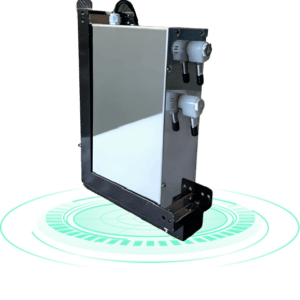
Fuel Treatment Modulator
Based on the above challenges, adhering to our original aspiration, we have dedicated over a decade to intensive R&D, studying internal combustion engine operation and fuel properties under varying temperature and humidity conditions. In high-temperature, high-pressure operating conditions, excessively high temperatures can cause engine knock (pre-ignition), leading to power loss, increased NOx, and long-term engine damage. Conversely, when ambient temperature is too high or humidity too low, it can also induce power loss and increased NOx. Low-temperature fuel has high viscosity, slow vaporization, and poor atomization, causing delayed ignition. This condition worsens emissions of PM, CO, HC, and other pollutants. Both scenarios increase fuel consumption. Based on this, through in-depth R&D, repeated testing, and iterative optimization of steam generation and dehydration processes, we have ultimately created an integrated turnkey solution using top-tier materials and craftsmanship. It aims to provide users with unprecedented fuel economy, power performance, environmental benefits, and lower total cost of ownership.
Fuel Treatment Modulator
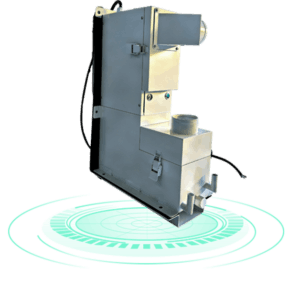
Emission Reduction Air Intake Modulator
Chinese Invention Patent No.: CN202510989776.9
Utility Model Patent Certificates:
CN202422013308.1
CN202422822662.9
CN202421710327.3
Generating ultrafine water vapor
Ultrasonic technology is used to convert water into extremely fine water vapor (particle diameter 0-8 micrometers)
Improve oil properties
Increase the proportion of low-carbon alkanes in the fuel and decrease the proportion of long-carbon alkanes. Due to ionization, the outer electrons of the fuel molecules are rearranged, improving fuel viscosity and resulting in finer fuel atomization.
Synergistic Mixing Effect
Moisture increases combustion vortex, inhibiting carbon buildup during combustion. Moisture also increases the heat capacity ratio of air, effectively suppressing peak combustion temperatures and lowering engine cylinder temperatures, thus improving engine efficiency.
Intelligent Performance Control
Adjusts fuel treatment intensity based on ambient temperature and matches the fuel treatment level with the engine's actual operating energy consumption profile.