Performance

Thermal efficiency improvement: 5%–10%
NOx reduction: up to 95%
PM reduction: up to 92%
Fuel savings: 25%–40%
Maintenance cost reduction: 20%–40%

Through the loading deceleration method test on the dynamometer, the vehicle shows a significant increase in rotational speed under the same conditions when the device is turned on compared to when it is off. Emission smoke density is notably reduced at both 100% and 80% load conditions, and an increase in nitrogen oxides (NOx) at the 80% load point indicates more complete fuel combustion. Particulate matter emissions are reduced by 92.6%, and nitrogen oxide emissions are reduced by 95%.

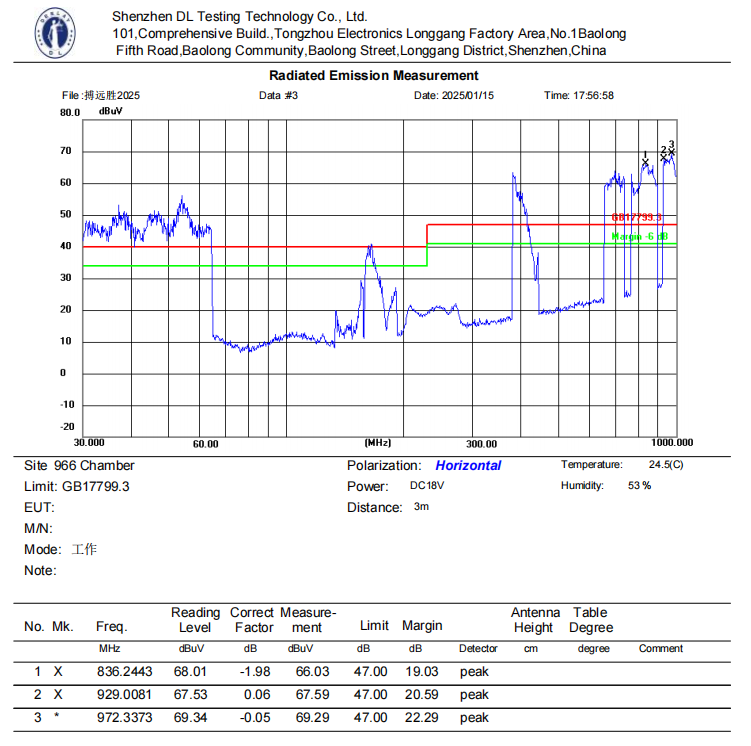
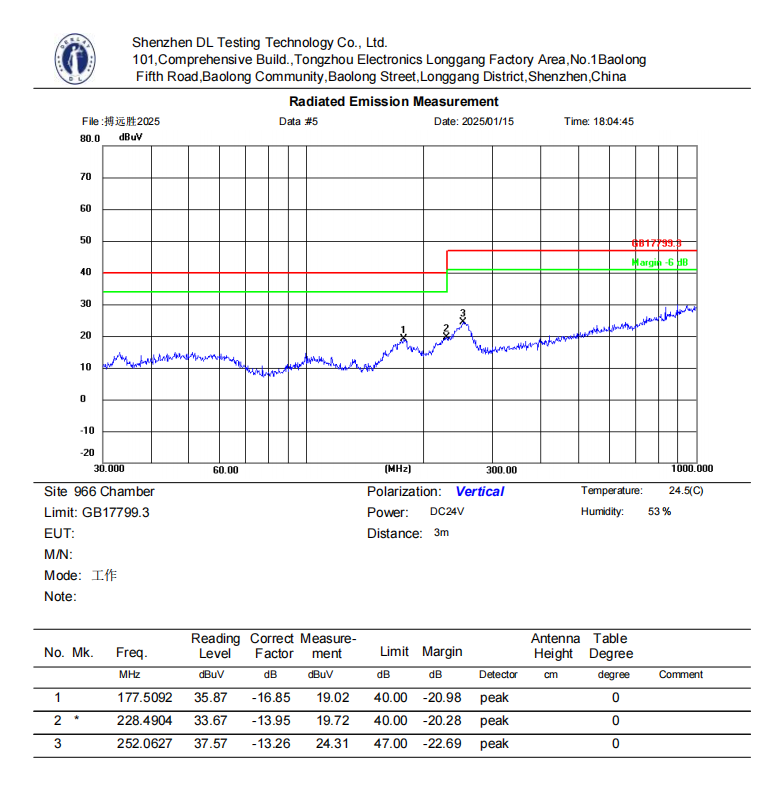
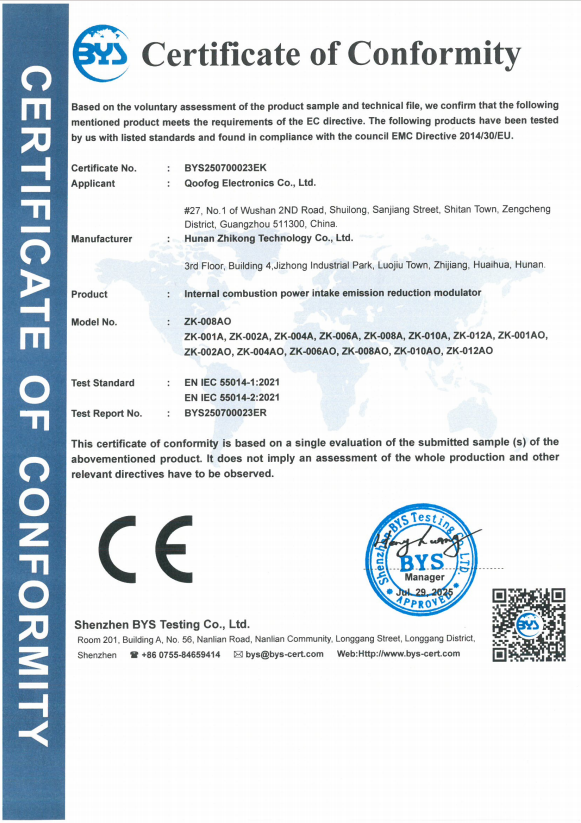
CE & Electromagnetic Compatibility Certification

Fuel Economy Improvement (Based on actual European fleet operation data)

Delivers 25% - 40% fuel savings for European heavy-duty trucks

Maintenance Cost Reduction

Due to more complete combustion and reduced carbon deposits, overall maintenance costs are estimated to decrease by 20% - 40%, with significantly extended engine oil life.

Combustion Efficiency & Performance Enhancement

Thermal Efficiency Improvement: 5% - 10% Effective Torque Increase: Up to 10~25% (especially in low RPM ranges) Combustion Stability: Significantly improved, power output is stable and reliable.

Emission Pollutant Reduction

Nitrogen Oxides (NOx):Reduced by 50% - 95% Hydrocarbons (HC):Reduced by 80% - 90% Carbon Monoxide (CO):Reduced by 70% - 95% Particulate Matter (PM): Reduced by 90% - 95% Solves the issue of emission variations due to different environments.

Key Mechanical Parameter Improvements

Combustion Chamber Carbon Deposit:Reduced by 30% - 40%, effectively alleviating thermal load. Knock Resistance:Significantly improved, allowing for more optimized ignition timing. In-Cylinder Pressure Characteristics:Smoother pressure rise curve reduces mechanical stress.

Basic Parameter Details

Power supply 3 – 12 A (12/24 V DC)

Operating Temperature Range -40°C to +120°C

Housing & Structural Parts Made of anti-corrosion stainless steel, providing excellent corrosion resistance and structural strength, ensuring long-term reliability in harsh environments

Core Atomization Module Hermetically sealed for direct use; specifically designed for fan shrouds, using special formulations and processes to continuously withstand high-temperature working environments up to 100°C, ensuring atomization efficiency and lifespan.

Basic Parameter Details

Piping & Connections All pipe connections use high-temperature resistant hoses, rated for -40°C to +200°C, durable, ensuring leak-free pathways.

Electronics & Cooling System Uses dedicated low-altitude aerospace-grade switching power supply and control system, providing excellent heat dissipation for power components, ensuring electronic system stability and extended lifespan under long-term operation.

High-Precision Spiral Cloth Filter Element Pre-filters air/vapor before entering the reaction chamber, ensuring only purified gas participates in the reaction, preventing contamination and system clogging.

Core Technological Mechanisms
  • Ultrasonic Nanoscale Cool Mist Generation Uses a specific frequency (1.7 MHz) piezoelectric ultrasonic transducer to agitate water into ultrafine water vapor with a diameter of 0-8 micrometers. This size ensures maximized surface area for instantaneous evaporation and efficient thermal management.
  • Intelligent Adaptive Control The system simulates engine ECU spark or fuel injection signals (MAF/MAP) to adjust water mist output in real-time, ensuring perfect matching with engine load. (For gasoline and natural gas engines; for diesel engines, we use DC 24V power supply, with voltage differential derived from engine equipment, as diesel engines are better suited for lower water temperature operation).
  • AI-Driven Algorithm: The built-in processor runs advanced algorithms to analyze pulse waveforms from fuel injection signals in real-time, accurately determining the engine’s real-time load and speed status.
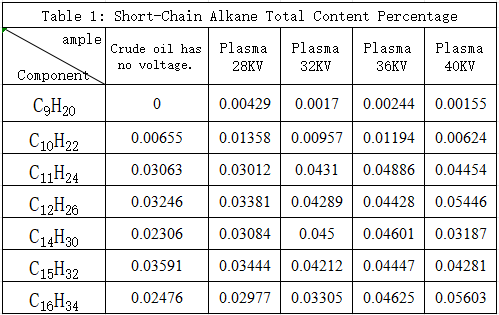
  • Increases Proportion of Short-Chain Alkanes in Fuel: Plasma efficiently increases the proportion of short-chain alkanes, effectively reducing fuel viscosity, optimizing atomization characteristics, and enhancing combustion performance, laying a solid foundation for efficient combustion.
  • Decreases Proportion of Long-Chain Alkanes in Fuel: Plasma efficiently decreases the proportion of long-chain alkanes, inhibiting the generation and deposition of carbon deposits during combustion, improving mixture homogeneity, accelerating combustion, and enhancing engine efficiency.
picture1

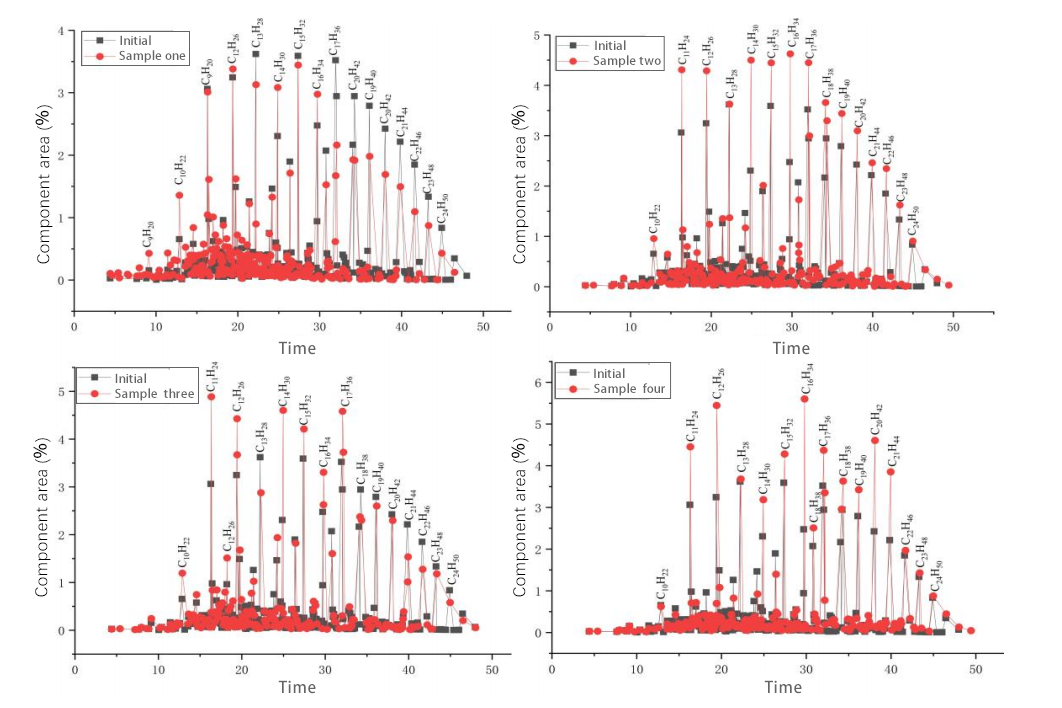
Figure 1: Comparison of Diesel Components Before and After Plasma Activation. The main components of diesel are alkanes (C9-C24). Plasma activation can effectively increase the total percentage content of short-chain alkanes and decrease the total percentage content of long-chain alkanes. Sample 3 (diesel treated with 36kV plasma excitation voltage) shows that the growth of short-chain alkane components and the reduction of long-chain alkane components have essentially reached an optimal balance.
picture2

With the increase of the plasma excitation voltage, the content of low-carbon alkanes gradually increases and then tends to stabilize, basically reaching its maximum when the plasma excitation voltage is 36 kV. Analysis shows that plasma discharge can crack long-chain alkanes into low-carbon alkanes, thereby increasing the content of low-carbon alkanes.
picture5

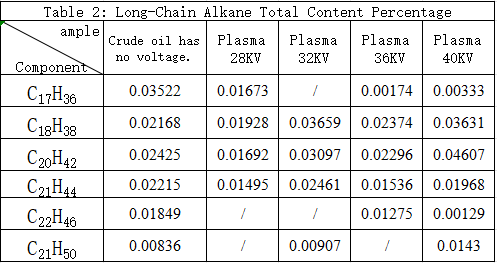
With the increase of the plasma excitation voltage, the content of long-chain alkanes gradually decreases and then tends to stabilize, essentially reaching its minimum when the plasma excitation voltage is 36 kV. This also confirms that plasma discharge can crack long-chain alkanes into low-carbon alkanes, thereby reducing the content of long-chain alkanes.
picture4

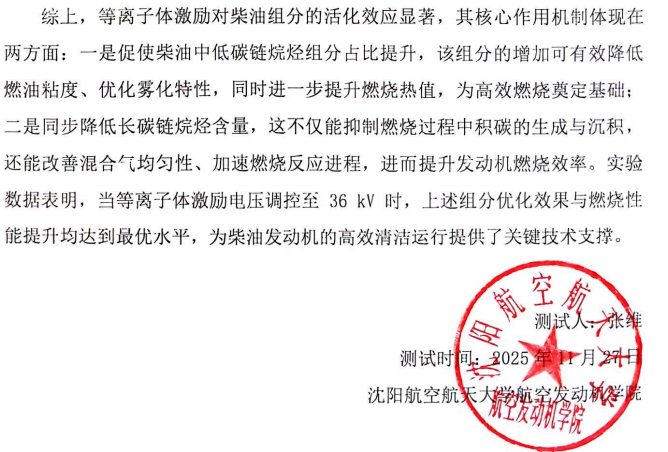
Summary: Plasma has a significant activation effect on diesel. On the one hand, it reduces the viscosity of the oil and optimizes the atomization characteristics Second, it inhibits the formation of carbon deposits during combustion, improves air mixing and enhances the combustion efficiency of the engine
picture12
CE certification
picture10
picture9
picture11

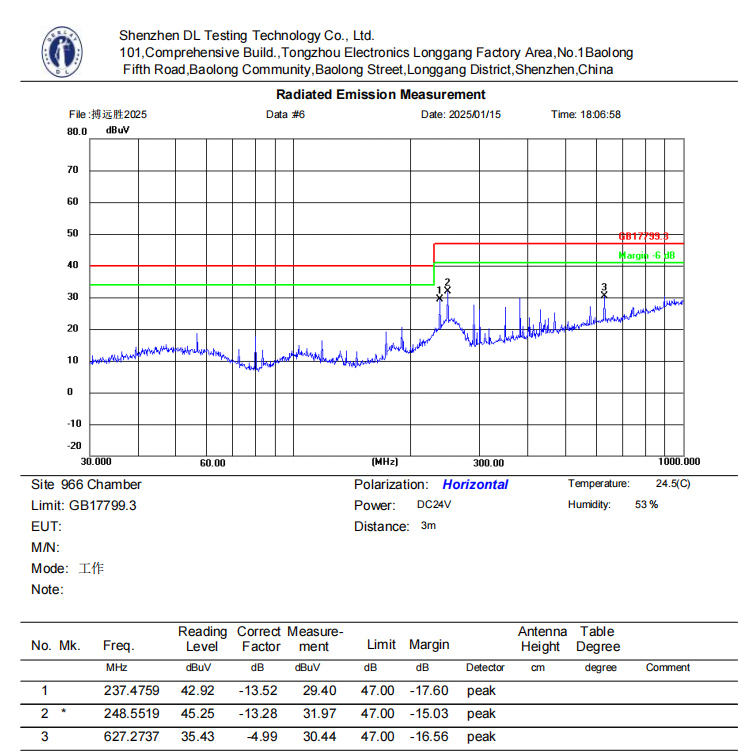
According to the national standard GB 17799.3-2023 Electromagnetic Compatibility – General Standard, this product meets the electromagnetic compatibility standards.;